How Influencers Make Money: 10 Revenue Streams in 2026
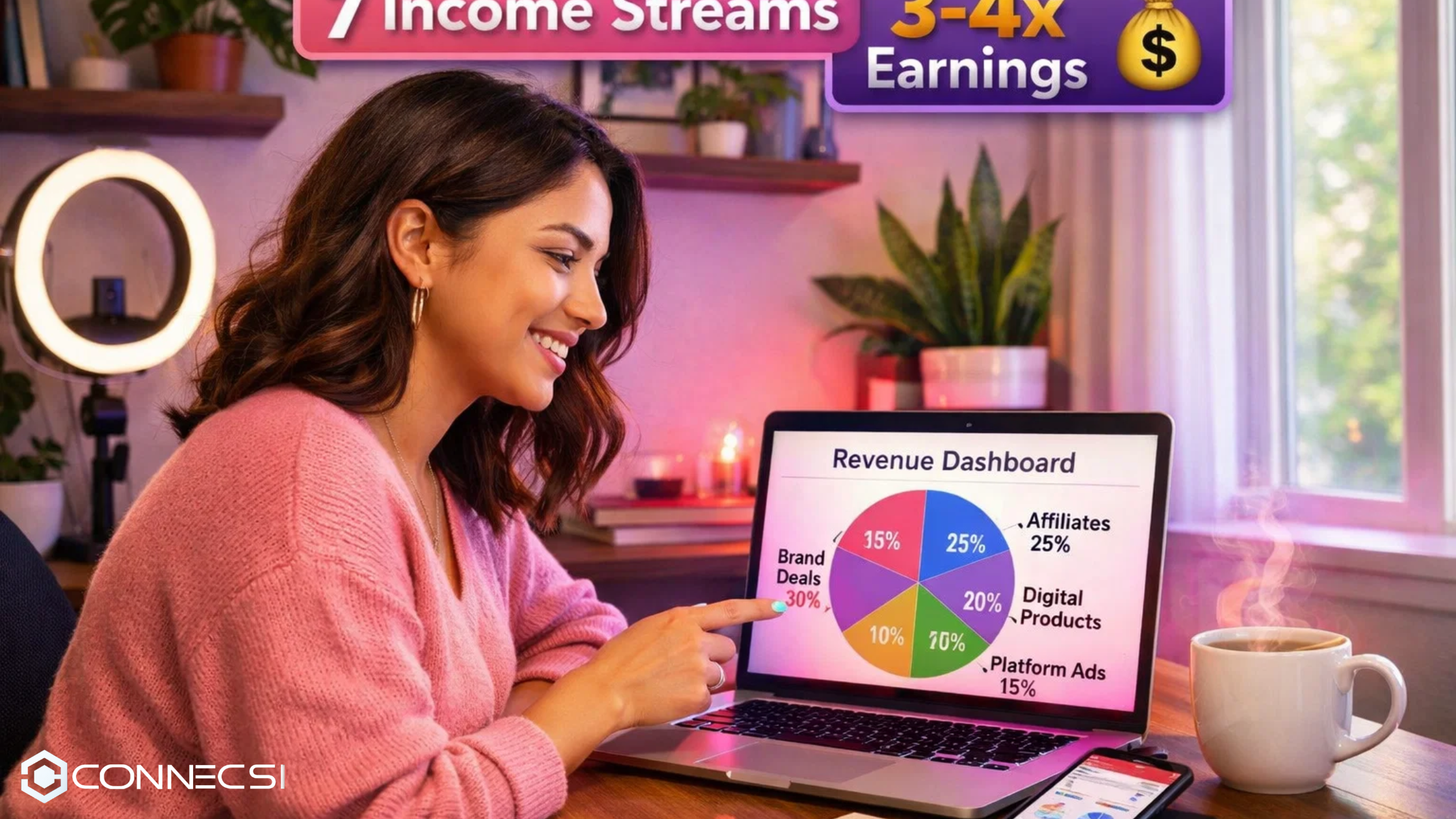
A creator with 50,000 Instagram followers posts sponsored content twice a month at $2,000 per post, earning $4,000 monthly from brand deals. Another creator with the same follower count runs affiliate programs, sells digital courses, monetizes a newsletter, and licensing their content to brands—earning $12,000 monthly from seven different revenue streams. Same audience size, three times the income. The difference? Understanding that brand partnerships represent just 15-20% of what successful creators actually earn.
The global influencer market reached $32.6 billion in 2026, but most creators still rely almost entirely on sponsored posts despite the fact that top-earning influencers generate 59% of revenue from sponsored content while diversifying the remaining 41% across affiliate commissions, platform payouts, digital products, and owned businesses. This over-reliance on brand deals creates massive income vulnerability—one algorithm change, one platform policy shift, or one slow month eliminates your entire paycheck if you haven't built multiple income streams.
The creators who consistently answer "how influencers make money" with 5-7 different revenue streams earn 3-4x more than those relying solely on sponsored posts, according to creator economy research. The most financially stable influencers follow a 30/25/20/15/10 revenue allocation model: 30% from brand partnerships, 25% from their owned products or courses, 20% from affiliate commissions, 15% from platform revenue, and 10% from services like coaching or consulting. This diversification means losing one income source drops total earnings by 10-30% rather than 100%.
This guide breaks down the 10 primary revenue streams modern influencers use to build sustainable, diversified income portfolios that survive platform algorithm changes, seasonal brand budget fluctuations, and market shifts that destroy single-source-dependent creators annually.
1. Sponsored Content & Brand Partnerships
Sponsored content remains the foundation of influencer income despite no longer being the majority revenue source for top earners. Brands pay influencers to create posts, stories, reels, or videos featuring their products in exchange for exposure to the creator's engaged audience. According to current creator economy data, the influencer marketing industry will exceed $35 billion globally by 2026, with most brands allocating 20-25% of digital marketing budgets to influencer campaigns.
Rates vary dramatically by follower count and engagement. Nano-influencers with 1,000-10,000 followers typically charge $100-$500 per post. Micro-influencers at 10,000-50,000 followers command $500-$5,000 per post. Mid-tier creators with 50,000-500,000 followers earn $5,000-$10,000 per sponsored integration, while macro-influencers above 500,000 followers charge $10,000-$50,000+ per post depending on platform, content format, and usage rights.
Multi-post campaigns and long-term ambassadorships generate more value than one-off posts. A $15,000 six-month ambassadorship with 12 posts and 24 stories builds deeper brand relationships that lead to renewal contracts and rate increases.
2. Affiliate Marketing Commissions
Affiliate marketing lets creators earn commission every time someone purchases through their unique referral link or discount code. Industry research shows commission rates typically range from 5-50% depending on product category—digital products and software offer 20-50% commissions while physical goods pay 5-15%.
The power of affiliate income is scalability and passivity. A creator with 15,000 engaged followers can generate $2,000-$5,000 monthly through well-placed affiliate links if their audience actually purchases. Fashion and beauty creators perform exceptionally well with platforms like LTK and ShopStyle. Tech reviewers earn strong commissions promoting software tools. Finance influencers monetize through credit card referrals and investing platform partnerships.
Unlike sponsored posts that pay once, affiliate content continues earning as long as the link remains active and the content stays visible. A YouTube product review from 2024 can still drive affiliate sales in 2026 if the video ranks well in search and the product remains available. Many creators earn $10,000-$30,000 annually from evergreen affiliate content created years ago that compounds returns over time.
3. Platform Ad Revenue
Major social platforms now share advertising revenue directly with creators who meet eligibility thresholds. YouTube remains the most lucrative platform for ad revenue, paying creators $2-$25 per 1,000 views depending on niche and audience demographics. A channel averaging 500,000 monthly views can generate $2,000-$8,000 monthly from AdSense alone before any sponsorships or affiliate income.
TikTok pays creators through its Creator Fund and Creator Rewards Program at rates of $0.40-$1.00 per 1,000 views. Facebook monetizes through in-stream ads, branded content tools, and fan subscriptions. Instagram's ad revenue sharing applies primarily to Reels, with performance bonuses rewarding high-engagement short-form video content.
Platform payouts provide baseline income arriving monthly whether you post sponsored content or not. Creators earning $500-$2,000 monthly from ads have predictable cash flow even during slow sponsorship months.
4. Digital Products & Courses
Selling digital products transforms creators from service providers into business owners. Digital products scale infinitely—create once, sell thousands of times without inventory, shipping, or manufacturing costs. Common digital products include online courses ($97-$497), eBooks and guides ($27-$97), templates and presets ($9-$47), and certification study materials ($47-$197).
A fitness creator with 30,000 followers might sell a $147 training program to 200 buyers annually, generating $29,400 in pure profit since digital products have near-zero marginal cost. A design influencer sells Lightroom presets at $29 each to 50 customers monthly for $17,400 annual revenue that requires no ongoing customer service or fulfillment.
The key advantage is ownership—you control pricing, positioning, and customer relationships rather than negotiating rates with brands. Once created, digital products generate passive income that isn't dependent on algorithm visibility or brand marketing budgets. According to creator revenue analysis, digital products typically comprise 20% of total income for influencers earning $100,000+ annually.
5. Paid Memberships & Subscriptions
Membership platforms like Patreon, Ko-fi, and platform-native subscriptions (YouTube memberships, Instagram subscriptions, Twitter Blue) let creators charge monthly recurring fees for exclusive content and community access. Pricing typically ranges from $5-$50 monthly depending on the value provided and audience willingness to pay.
A creator with 20,000 followers who converts just 2% to paid members at $9.99 monthly generates $3,996 monthly recurring revenue ($47,952 annually). This predictable income stream smooths out the volatility of one-time sponsorships and provides baseline cash flow that enables long-term planning and investment in content quality.
The most successful memberships provide clear value—behind-the-scenes access, exclusive tutorials, Q&A sessions, or community forums. Creators treating memberships as VIP experiences retain 70-85% of subscribers monthly.
6. Merchandise & Product Lines
Physical merchandise and branded product lines let creators monetize brand equity directly. Print-on-demand services like Printful and Teespring eliminate inventory risk, while larger creators launch full product lines in categories aligned with their niche—beauty products, fitness supplements, apparel, or home goods.
Merch margins vary significantly. Print-on-demand typically yields $5-$15 profit per item with zero upfront investment. Custom product lines require manufacturing investment but offer 40-60% margins if volume justifies production minimums. A lifestyle creator selling 500 branded t-shirts quarterly at $10 profit each generates $20,000 annual merch revenue with minimal ongoing effort after initial design work.
The most profitable approach is creating products fans actually want rather than slapping logos on generic items. Limited drops create urgency and sell out faster than always-available inventory. Collaborations with established brands—where the creator designs exclusive collections—combine the creator's audience reach with the brand's manufacturing and distribution capabilities.
7. Newsletter Monetization
Email newsletters provide owned audience access immune to platform algorithm changes. Newsletter platforms like beehiiv, Substack, and ConvertKit enable direct monetization through paid subscriptions, sponsorships, and affiliate promotions. A newsletter with 5,000 engaged subscribers generates more consistent income than 50,000 social followers who see only 10% of posts due to algorithmic suppression.
Monetization methods include paid subscriptions ($5-$15 monthly), newsletter sponsorships ($25-$50 per 1,000 subscribers), and affiliate links embedded in content. beehiiv's ad network automatically connects creators with sponsors once they reach 1,000 subscribers, with creators reporting $100-$500 monthly from ads alone at this threshold.
The compounding advantage is permanence—your email list can't be deleted by platform policy changes, and subscribers see 100% of what you send versus the 5-15% organic reach on social platforms. Creators who built email lists 3-5 years ago now earn $10,000-$50,000 monthly from audiences they own outright.
8. Speaking Engagements & Workshops
Industry expertise opens lucrative speaking opportunities at conferences, corporate events, and workshops. Established creators command $5,000-$25,000 per keynote speech, with travel and accommodations covered separately. Virtual speaking engagements typically pay $2,000-$10,000 for 45-90 minute presentations without travel requirements.
Workshops and masterclasses provide another revenue layer. In-person workshops charge $297-$997 per attendee, with groups of 20-50 people generating $6,000-$50,000 per event. Virtual masterclasses reach larger audiences at lower price points—$47-$197 per attendee with 100-500 participants generating $4,700-$98,500 per virtual event.
Speaking income tends to cluster—book one major conference and others follow as event organizers share referrals. The credibility from speaking at recognized industry events also increases sponsorship rates and positions creators as thought leaders rather than just content producers, justifying premium rates across all revenue streams.
9. Content Licensing & Usage Rights
Brands increasingly license creator content for use in their own marketing channels beyond the original sponsored post. Usage rights fees range from $500-$5,000+ depending on how extensively the brand wants to repurpose content—using a creator's Instagram post in paid Facebook ads for 90 days might cost $1,500, while full perpetual rights across all channels could command $10,000+.
Savvy creators separate content creation fees from usage rights in contracts. A $3,000 sponsored Instagram post might include only 30-day organic posting rights, with the brand paying an additional $2,000 for 90-day paid advertising rights and $3,000 for 6-month website usage. This structure turns a $3,000 post into $8,000 total compensation.
User-generated content (UGC) creation has emerged as a standalone income stream where creators produce content specifically for brand marketing use without posting to their own channels. UGC rates run $150-$500 per piece of content, with full-time UGC creators producing 30-50 pieces monthly for $6,000-$15,000 monthly income without needing large follower counts.
10. Coaching & Consulting Services
Subject matter expertise translates into high-ticket coaching and consulting income. Fitness influencers offer 1-on-1 training at $200-$500 monthly. Business coaches charge $1,000-$5,000 monthly for personalized consulting. Even 20 coaching clients at $200 monthly generates $4,000 recurring revenue separate from any content monetization.
Group coaching programs scale income without proportionally increasing time commitment. A $497 8-week group program with 30 participants generates $14,910 per cohort. Running 4 cohorts annually creates $59,640 in coaching income alongside all other revenue streams.
According to creator income research, influencers with 10,000-30,000 engaged followers can realistically fill 20-30 coaching spots without paid advertising. The key is proving expertise through free content that demonstrates capability, then offering paid deep-dive support to audience members ready to invest in accelerated results.
- Top creators earn from 5-7 income streams, not just brand deals—diversification increases earnings 3-4x over single-source income
- Affiliate marketing generates $2,000-$5,000 monthly for creators with 15,000 engaged followers through scalable commission-based sales
- Digital products offer near-zero marginal costs—create once, sell thousands of times for $29,400+ annual profit
- Email newsletters reach 100% of subscribers versus 5-15% organic social reach, generating $10,000-$50,000 monthly for established lists
- Content licensing and usage rights can triple post value—$3,000 post becomes $8,000+ with paid ad and website rights
- Membership subscriptions create $48,000+ annual recurring revenue when 2% of 20,000 followers pay $9.99 monthly
The influencer economy in 2026 rewards creators who think like business owners rather than content producers chasing brand deals. While sponsored posts provide important foundation income, sustainable creator careers are built on diversified revenue portfolios where losing any single stream reduces earnings by 10-20% rather than eliminating income entirely.
Start with what you're already doing—if you're posting sponsored content, add affiliate links to non-sponsored posts. If you have engaged followers asking questions, package answers into a paid digital product. If you're good on camera, pitch speaking opportunities at industry events. Each additional revenue stream compounds, creating financial resilience that survives algorithm changes, platform shifts, and market fluctuations that destroy creators dependent on brand deals alone. And when you're ready to systematically manage brand partnerships, track campaign performance, and scale your creator business, platforms like Connecsi's influencer management tools provide the infrastructure that transforms scattered opportunities into organized, profitable operations.
Written by
Mohit Kumar
Sharing insights on influencer marketing, campaign strategy, and creator partnerships.
Other interesting articles you may like

How to Negotiate Brand Deals: Influencer Rate Guide 2026
Master how to negotiate brand deals with proven strategies. 73% of brands negotiate rates—learn to counter offers and earn 30-100% more per partnership.

Content Calendar Template: Stop the Last-Minute Content Scramble
Content calendar templates save brands 6-8 hours weekly on planning. Download our free Excel template with annual, monthly, and weekly views.
Influencer Media Kit Template: Create a Professional Portfolio in 2026
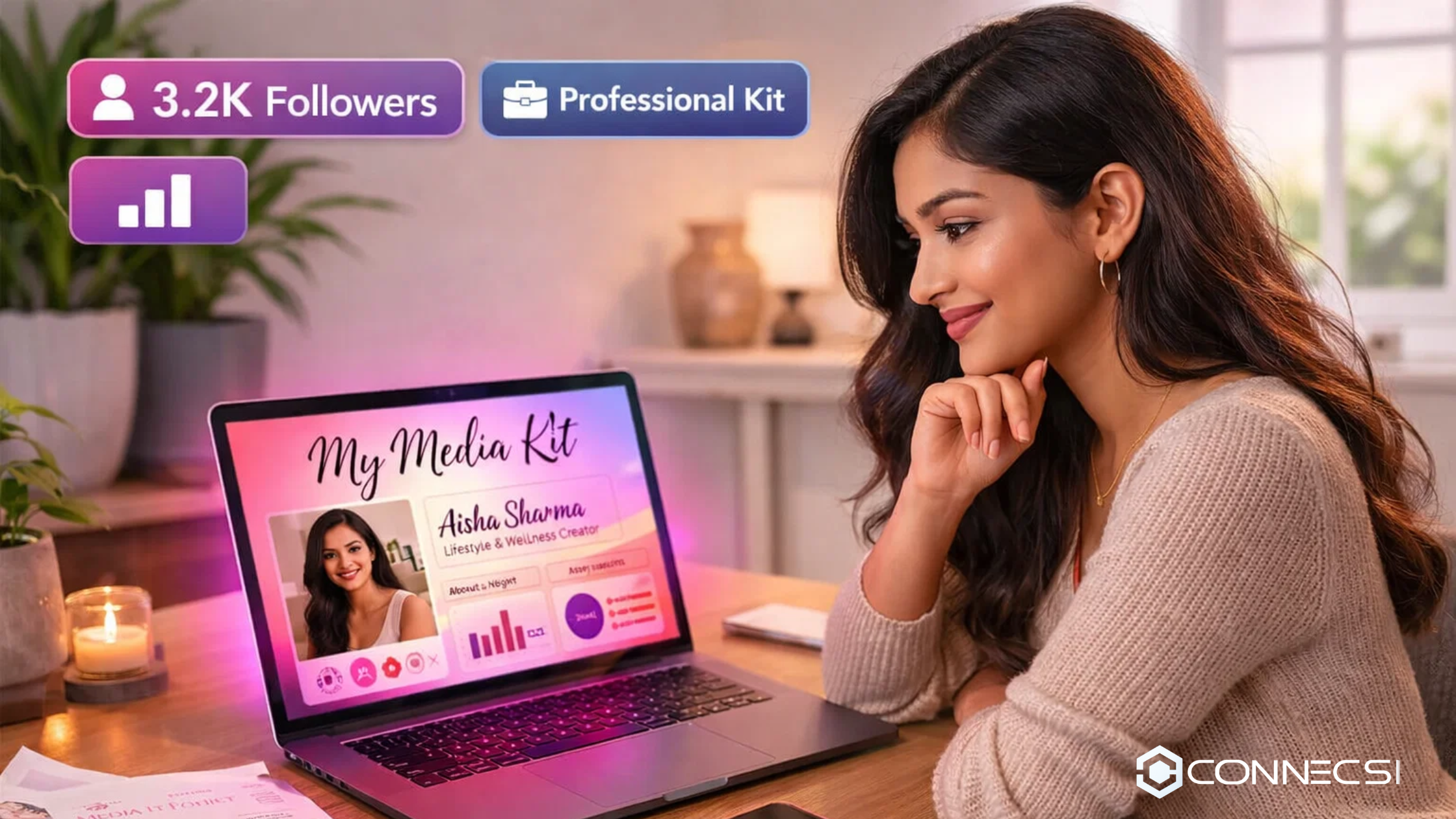
Your media kit is your business card, sales pitch, and credibility document rolled into one — and in 2026, brands expect every creator to have one ready. This comprehensive guide walks you through what to include (bio, demographics, engagement metrics, case studies, pricing), how to design a media kit that brands actually open, and why a professional template is the difference between getting ghosted and getting paid. Covers free vs premium templates, platform-specific strategies for Instagram/TikTok/YouTube/blogs, common mistakes that kill deals, and strategic deployment tactics to maximize partnership inquiries.
Stay Updated
Subscribe to our newsletter for the latest influencer marketing tips and industry insights.
Ready to automate your influencer marketing?
Search influencers, manage campaigns, and track results — all in one platform.
Start Free