Influencer Media Kit Template: Create a Professional Portfolio in 2026
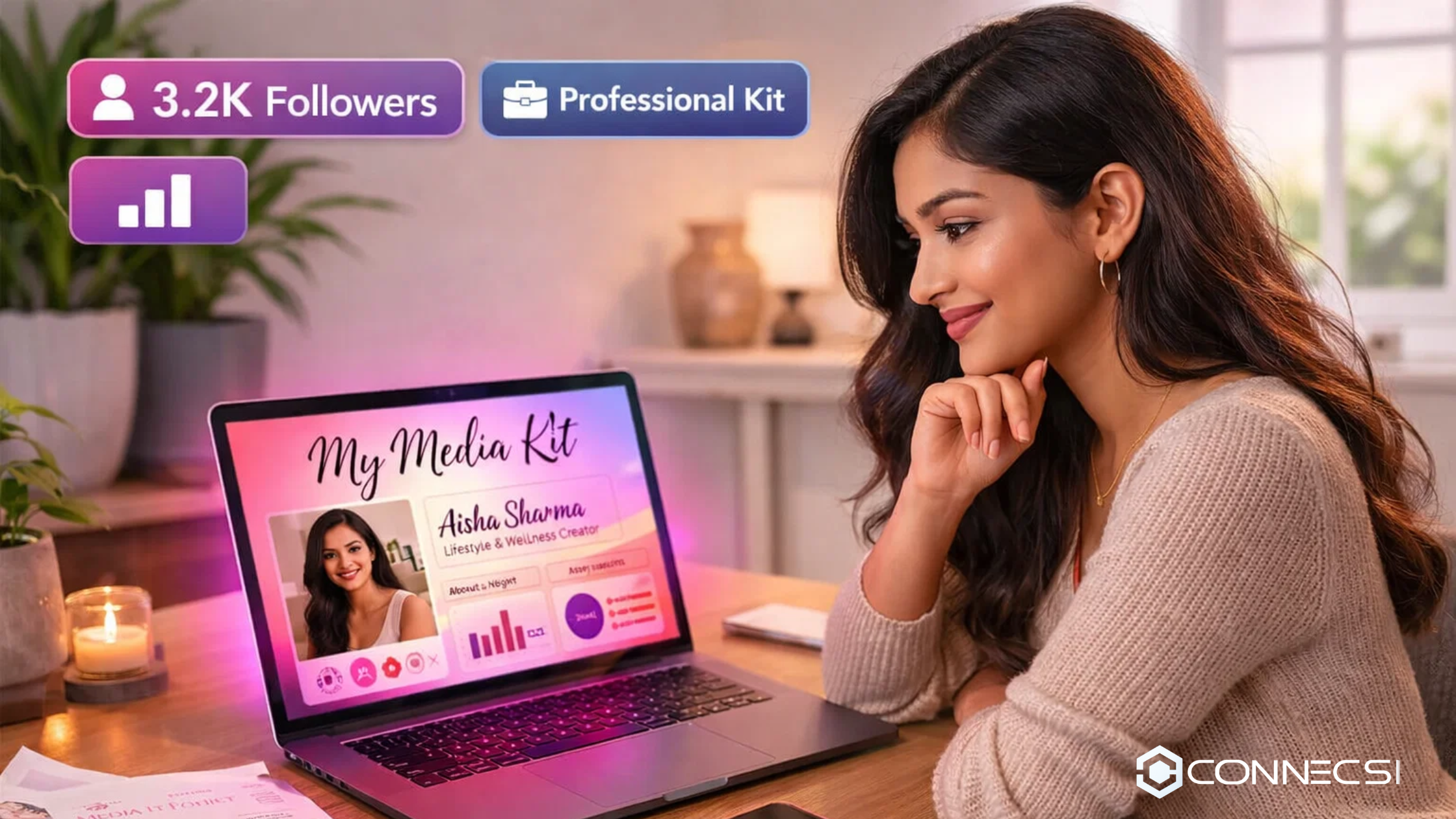
Your media kit is your business card, sales pitch, and credibility document rolled into one — and in 2026, brands expect every creator to have one ready. Whether you're pitching your first collaboration or negotiating a six-figure deal, a polished influencer media kit is the fastest way to prove your value and close partnerships. This comprehensive guide walks you through exactly what to include, how to design a media kit that brands actually open, and why a professional template is the difference between getting ghosted and getting paid.
According to industry data from 2026, 73% of brands require media kits before even considering partnerships with creators — and those who present well-structured kits receive 3x more partnership inquiries than those without. The message is clear: if you want to be taken seriously as a creator, you need a media kit that looks as professional as your content.
Create three versions of your media kit: a one-page summary for quick pitches, a full 2-3 page version for serious inquiries, and an interactive web version that updates automatically. This lets you match the format to the situation. Quick introduction? Send the one-pager. Brand requested your full kit? Send the complete version. Cold outreach on social? Share your web link. Flexibility increases response rates across different partnership scenarios.
What Is an Influencer Media Kit?
An influencer media kit is a professionally designed document that showcases your audience, engagement metrics, content style, and collaboration value in one easy-to-review package. Think of it as your creator résumé — but instead of listing past jobs, you're demonstrating why brands should invest in you as a marketing partner.
The best media kits answer three critical questions within 30 seconds: Who is your audience? How engaged are they? What results have you delivered for other brands? If a brand can't answer these questions immediately after opening your kit, you've already lost the opportunity.
A strong media kit typically includes your bio and positioning, follower counts and engagement rates across platforms, audience demographics (age, gender, location), past brand collaborations and case studies, content examples that showcase your style, pricing or partnership packages, and clear contact information with next steps. Each section serves a specific purpose in building trust and reducing friction in the sponsorship sales process.
Why Every Creator Needs a Media Kit in 2026
The creator economy has professionalized rapidly. What worked in 2021 — a casual DM with your follower count — no longer cuts it. Brands are investing billions into influencer marketing, and they expect creators to operate like professional businesses. Your media kit signals that you understand this shift.
First, it saves time for both you and the brand. Instead of answering the same questions in every pitch email, you send one document that covers everything. Marketing managers can forward your kit internally without playing telephone with your stats. Second, it demonstrates professionalism before you ever speak. A well-designed kit shows brands you take partnerships seriously and understand what they need to make decisions.
Third, it positions you for premium pricing. Creators with professional kits command 40-60% higher rates than those without because they're perceived as experienced partners who deliver results. Fourth, it differentiates you from competitors. When a brand is evaluating five creators in your niche, the one with the polished kit gets remembered — and usually gets the deal.
Finally, it creates a feedback loop for growth. Building your media kit forces you to analyze your metrics, understand your audience deeply, and articulate your unique value. This clarity helps you pitch better, create more strategic content, and grow faster.
Essential Elements Every Media Kit Must Include
1. Your Story and Brand Positioning
Start with a compelling bio that positions you clearly in your niche. Don't just list credentials — tell brands why your audience trusts you and what makes you different from other creators. Are you a plant-based nutrition coach for busy professionals? A travel creator specializing in sustainable tourism? A tech reviewer who focuses on accessibility features? The more specific your positioning, the easier it is for brands to see the fit.
Include a professional photo that matches your content aesthetic. If you create polished fashion content, show polish in your headshot. If you're a gaming streamer, show personality and energy. Your photo should make brands think, "Yes, this is what their audience sees and connects with."
2. Audience Demographics and Insights
This is where most creators fail — they provide vague guesses instead of actual data. Brands need to know exactly who your followers are because they're comparing your audience to their target customers. Pull real analytics from your platform insights and include age ranges with percentages (e.g., 45% aged 25-34, 30% aged 35-44), gender distribution, top geographic locations by country and city, household income levels if available, and professional industries or interests your audience represents.
Why does this matter? If a brand sells premium skincare products to women 30-45 in major U.S. cities, and your audience is 70% male aged 18-24 in Southeast Asia, there's no partnership fit — no matter how impressive your follower count. Save everyone time by being transparent upfront.
3. Performance Metrics That Actually Matter
Stop leading with follower count. In 2026, brands care about engagement quality over audience size. Your media kit should prominently feature your average engagement rate calculated as (likes + comments + shares) / followers × 100, monthly reach and impressions across all platforms, audience growth percentage over the past 3-6 months, average views per post or video, and content performance benchmarks compared to your niche.
For example, a creator with 50,000 followers and a 5% engagement rate (2,500 interactions per post) is more valuable than one with 500,000 followers and 0.5% engagement rate (same 2,500 interactions) because the smaller audience is demonstrably more connected and responsive. Research shows that engagement rate is now the #1 metric brands evaluate when selecting influencer partners.
4. Past Collaborations and Case Studies
Social proof is everything. Even if you've only worked with three brands, showcase those partnerships with brief results. Structure it like this: Brand name and campaign type, deliverables you provided, key metrics and outcomes, and any standout results or testimonials. For example: "Partnered with HealthCo for product launch campaign — 3 Instagram posts + 2 Stories — Generated 75K impressions, 3.2% engagement rate, 1,200 click-throughs to landing page — Brand reported 18% sales lift during campaign week."
If you're new and don't have brand partnerships yet, include organic content that demonstrates your influence. Show a post that went viral, highlight user-generated content your followers created, or feature community engagement examples. Anything that proves your audience listens to you.
5. Content Examples and Creative Style
Brands need to visualize what sponsored content will look like. Include 3-5 high-quality examples of your best-performing content across different formats — feed posts, Stories, Reels, videos, or blog posts. Choose pieces that showcase your range while staying true to your aesthetic.
Caption each example with performance data: "Instagram Reel — 125K views, 8.5% engagement rate, 450 saves" or "Blog post — 15K pageviews, 4:30 avg. time on page, 12% conversion to email list." This transforms your portfolio from "here's what I make" to "here's how my content performs."
6. Partnership Packages and Pricing
The pricing debate is real — should you include rates or say "contact for quote"? The answer: include price ranges. Transparency filters out brands with mismatched budgets and attracts qualified inquiries. Structure your pricing as tiered packages: Starter Package ($2,000-3,000) might include 1 Instagram post + 2 Stories, Standard Package ($5,000-7,500) might include 1 Reel + 3 feed posts + Story series, and Premium Package ($10,000+) might include full campaign with multiple platforms, content rights, and performance reporting.
Add a note that pricing is customizable based on exclusivity, usage rights, campaign scope, and timeline. This shows flexibility while establishing your baseline value. Never apologize for your pricing — if you've built a real audience with strong engagement, your rates are justified.
7. Contact Information and Next Steps
Make it ridiculously easy for brands to reach you. Include a dedicated business email (not your personal Gmail), your preferred contact method and response time (e.g., "I respond to partnership inquiries within 24-48 hours"), links to your best-performing content or portfolio website, and a clear call-to-action like "Ready to collaborate? Email me at [email] with your campaign brief."
Don't make brands hunt for your contact info or guess how to proceed. Remove every bit of friction from the outreach process because hesitation kills deals.
How to Design a Media Kit That Gets Opened
Design matters more than you think. A cluttered, confusing kit gets deleted within seconds no matter how good your metrics are. Follow these design best practices for 2026.
Keep It Clean and Scannable
Most brand managers skim media kits rather than read them thoroughly. Use plenty of white space to let information breathe. Organize content with clear section headers and visual hierarchy. Stick to 2-3 brand colors maximum to avoid visual chaos. Choose readable fonts — one for headlines, one for body text. Use bullet points and short paragraphs for quick scanning.
Your goal is to make the most important information (engagement rate, audience demographics, past results) pop visually so brands can find it in under 10 seconds.
Optimize for Mobile Viewing
Over 70% of brand managers review media kits on their phones, not desktop computers. If your kit doesn't look good on a small screen, you've lost the deal before they finish scrolling. Design mobile-first by stacking information vertically, using larger fonts than you would for print, compressing images to reduce file size, and testing your PDF on actual mobile devices before sending.
Better yet, create an interactive web-based version that's automatically mobile-responsive. Tools like Canva, Adobe Express, or dedicated media kit platforms make this easy even without design experience.
Use Data Visualization Strategically
Numbers in paragraphs are forgettable. Numbers in charts and graphs tell stories. Transform your metrics into visuals: use a pie chart to show audience demographics by age or location, use a line graph to demonstrate follower growth over time, use bar charts to compare engagement rates across platforms, and use icons or badges to highlight key stats like "Top 5% engagement rate in niche."
Keep visualizations simple and clear. Complex charts confuse busy marketing managers. Your goal is instant comprehension, not impressive complexity.
Match Your Content Aesthetic
Your media kit should feel like an extension of your brand, not a generic template. If your Instagram aesthetic is bright and colorful, reflect that in your kit design. If you create minimalist content, keep your kit clean and understated. If you're known for humor and personality, let that shine through in your copy and visuals.
Brand consistency builds trust. When everything from your Instagram grid to your media kit to your email signature looks cohesive, brands perceive you as organized and professional.
Influencer Media Kit Template: Free vs. Custom Options
You don't need to spend thousands on a custom-designed media kit, but you also shouldn't settle for a template that screams "I downloaded this for free and changed nothing." Here's how to approach templates strategically.
Free Template Platforms
Canva offers hundreds of influencer media kit templates with drag-and-drop editing, most available on the free plan. The templates are professionally designed and export as high-quality PDFs. Limitations: everyone uses Canva, so your kit might look similar to competitors.
Google Slides provides basic templates that work surprisingly well for clean, minimal designs. Export as PDF when finished. Great for beginners with zero budget. Adobe Express (formerly Adobe Spark) offers free and paid templates with more sophisticated design controls than Canva. Good middle ground for creators who want more customization without the Adobe Creative Suite learning curve.
Premium Template Options
Etsy and Creative Market sell customizable media kit templates for $15-50. These are often more unique than free options and come with multiple file formats. Look for templates that include editable Canva files, Adobe InDesign files, or Google Slides versions for maximum flexibility.
What to look for: modern, clean design that won't look dated in six months; easy customization without design skills required; mobile-responsive layout if exporting as PDF; multiple page layouts for different content needs; and matching brand asset templates (letterhead, invoice, etc.) for complete professional consistency.
Custom Design Investment
If you're an established creator earning $50K+ annually from partnerships, consider hiring a designer to create a fully custom media kit. Budget $500-2,000 depending on complexity and designer experience. You'll get a unique design that perfectly represents your brand, files optimized for both PDF and web use, and templates you can easily update yourself as metrics change.
Platform-specific designers on Fiverr, Upwork, and 99designs specialize in influencer media kits. Review portfolios carefully and ask for samples of past media kit work before hiring.
Platform-Specific Media Kit Strategies
Different platforms require different emphasis in your media kit. Here's what to highlight based on where you create.
Instagram and TikTok Creators
For Instagram, emphasize Reels performance (where engagement happens in 2026), Story reach and interaction rates, monthly reach and impressions, audience demographics with location breakdowns, and content versatility across feed posts, Reels, and Stories. For TikTok, focus on average views per video (more important than follower count), viral potential in your niche, trending audio adoption and performance, 30-day video view trends, and audience watch time and completion rates.
Both platforms value momentum. Show month-over-month growth prominently to signal you're on an upward trajectory.
YouTube Creators
YouTube media kits should feature channel subscriber count and monthly growth rate, average views per video (more important than subs), average watch time percentage (YouTube's key metric), video upload frequency and consistency, typical video length and content categories, and past integrations with performance data. Brands care deeply about watch time on YouTube because it signals genuine audience interest, not passive scrolling.
Blog and Newsletter Creators
Written content creators need to emphasize monthly unique visitors and pageviews, average time on page and bounce rate, email subscriber count and growth rate, email open rates (20-30% is good; 40%+ is excellent), click-through rates for sponsored content, and audience demographics with specific interests. Include screenshots of Google Analytics or email platform data to prove these numbers are real.
Common Media Kit Mistakes That Cost You Deals
Even experienced creators make these errors. Avoid them and you'll immediately stand out.
Outdated Metrics
Nothing kills credibility faster than old numbers. If your media kit shows metrics from six months ago, brands assume you're either lazy or hiding a decline. Update your kit quarterly at minimum — monthly if you're in a growth phase. Always include the date your metrics were pulled (e.g., "Metrics as of March 2026").
Vague Audience Data
Saying "mostly millennial women interested in health and wellness" tells brands nothing. They need specifics: "68% female, 45% aged 28-35, 72% located in urban areas, top interests include yoga (32%), plant-based nutrition (28%), and mental health (24%)." Pull this data from your platform analytics, don't guess.
No Clear Value Proposition
Your media kit should answer the question "Why should I work with you instead of the 50 other creators in your niche?" What makes you different? Higher engagement? Unique audience access? Specific expertise? Proven conversion rates? If you can't articulate this clearly, brands won't either.
Missing Call-to-Action
Too many media kits end with... nothing. No next steps. No contact prompt. Brands are left wondering "Now what?" Always close with a clear CTA: "Ready to discuss a partnership? Email me at [email] or schedule a call at [calendar link]."
Pricing Ambiguity
Both extremes hurt you. Listing exact prices with no flexibility ("Instagram post = $2,500, non-negotiable") makes you seem inflexible. But saying nothing about pricing ("Contact for rates") wastes everyone's time if budgets don't align. The sweet spot: price ranges or starting prices ("Instagram collaborations starting at $2,000 — custom packages available").
How to Use Your Media Kit Strategically
A media kit sitting on your computer helps no one. Here's how to actually deploy it to land partnerships.
Cold Outreach
When pitching brands you'd love to work with, personalize your email but always include your media kit link or attachment. Structure your pitch like this: brief introduction (who you are, why you love their brand), specific collaboration idea aligned with their current marketing, your media kit link with one highlight stat ("I've attached my media kit — my audience of 85K engaged followers in your target demo averages 6.2% engagement"), and a simple ask ("Would love to discuss how we could create something special together. Are you available for a quick call next week?").
Don't dump your entire media kit into the email body. Keep the pitch short, warm, and human. Let the media kit do the heavy lifting on stats and credibility.
Brand Inquiries
When brands reach out to you (the dream scenario), send your media kit immediately with a friendly note: "Thanks so much for reaching out! I'd love to learn more about what you have in mind. I've attached my media kit so you can see my audience and past work. What type of collaboration were you thinking?"
This establishes your professionalism while keeping the conversation open and curious. You're not saying "here are my rates, take it or leave it" — you're saying "I'm interested and prepared, let's explore fit."
Your Bio Links
Add your media kit to your link-in-bio tools (Linktree, Beacons, etc.) under a clear label like "Work With Me" or "Brand Partnerships." Curious brands often check your social bios first. Make it effortless for them to find your kit without emailing you.
Influencer Platforms
If you're on creator marketplaces or influencer platforms, upload your media kit to your profile. These platforms connect brands with creators, and a professional kit signals you're serious and ready to work. It's the difference between being browsed and being booked.
Keeping Your Media Kit Current
Your media kit is a living document, not a set-it-and-forget-it asset. Top creators refresh their kits monthly or after major milestones like viral content, new partnerships, or significant audience growth.
Set a calendar reminder to review your media kit on the first of every month. Update metrics, add new collaborations to your case studies, refresh content examples with recent high-performers, and adjust pricing if your rates have changed. Archive old versions with dates so you can track your growth over time and show brands your trajectory.
Version control matters. Name your files clearly: "YourName_MediaKit_March2026.pdf" so both you and brands know they're looking at current information. Nothing undermines trust faster than accidentally sending an outdated kit.
- A professional media kit is mandatory in 2026 — 73% of brands require them before considering partnerships, and creators with kits receive 3x more inquiries than those without.
- Lead with engagement rate, not follower count — brands care about audience quality and interaction more than vanity metrics, so emphasize your 5.2% engagement rate before your 50K followers.
- Include audience demographics with actual data — pull real analytics showing age ranges, gender, location, and interests so brands can immediately assess fit with their target customers.
- Showcase 3-5 past collaborations with results — social proof is everything; even small partnerships with documented outcomes (impressions, engagement, conversions) build credibility and justify your rates.
- Use tiered pricing packages instead of single rates — Starter ($2-3K), Standard ($5-7.5K), and Premium ($10K+) packages give brands flexibility while establishing your value and making customization easy.
- A professional media kit is mandatory in 2026 — 73% of brands require them before considering partnerships, and creators with kits receive 3x more inquiries than those without.
- Lead with engagement rate, not follower count — brands care about audience quality and interaction more than vanity metrics, so emphasize your 5.2% engagement rate before your 50K followers.
- Include audience demographics with actual data — pull real analytics showing age ranges, gender, location, and interests so brands can immediately assess fit with their target customers.
- Showcase 3-5 past collaborations with results — social proof is everything; even small partnerships with documented outcomes (impressions, engagement, conversions) build credibility and justify your rates.
- Use tiered pricing packages instead of single rates — Starter ($2-3K), Standard ($5-7.5K), and Premium ($10K+) packages give brands flexibility while establishing your value and making customization easy.
Building a professional influencer media kit isn't just about looking polished — it's about proving your value in a format brands can easily evaluate and approve. Whether you're a nano creator just starting brand partnerships or an established influencer refining your pitch, a well-structured media kit is the fastest path to more collaborations and higher rates. Connecsi's Aura Score platform helps creators quantify their influence with a transparent scoring system that complements your media kit by giving brands an objective measure of your creator power. When your portfolio combines detailed audience insights, proven results, and a credible influencer score, you become the obvious choice for brand partnerships.
Written by
Mohit Kumar
Sharing insights on influencer marketing, campaign strategy, and creator partnerships.
Other interesting articles you may like
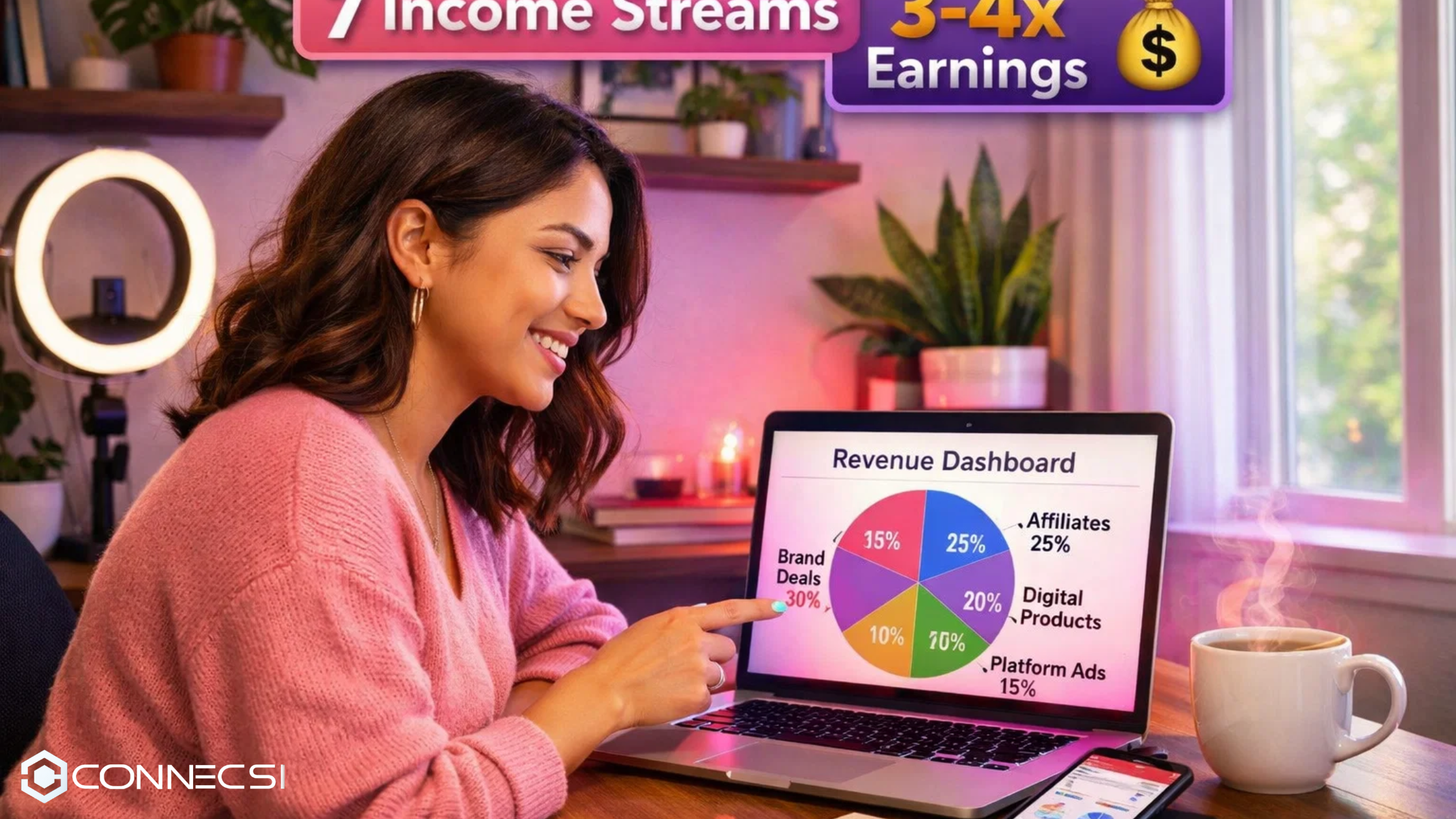
How Influencers Make Money: 10 Revenue Streams in 2026
Top creators earn from 5-7 income streams, not just brand deals. Learn how influencers make money through affiliate marketing, courses, and subscriptions.
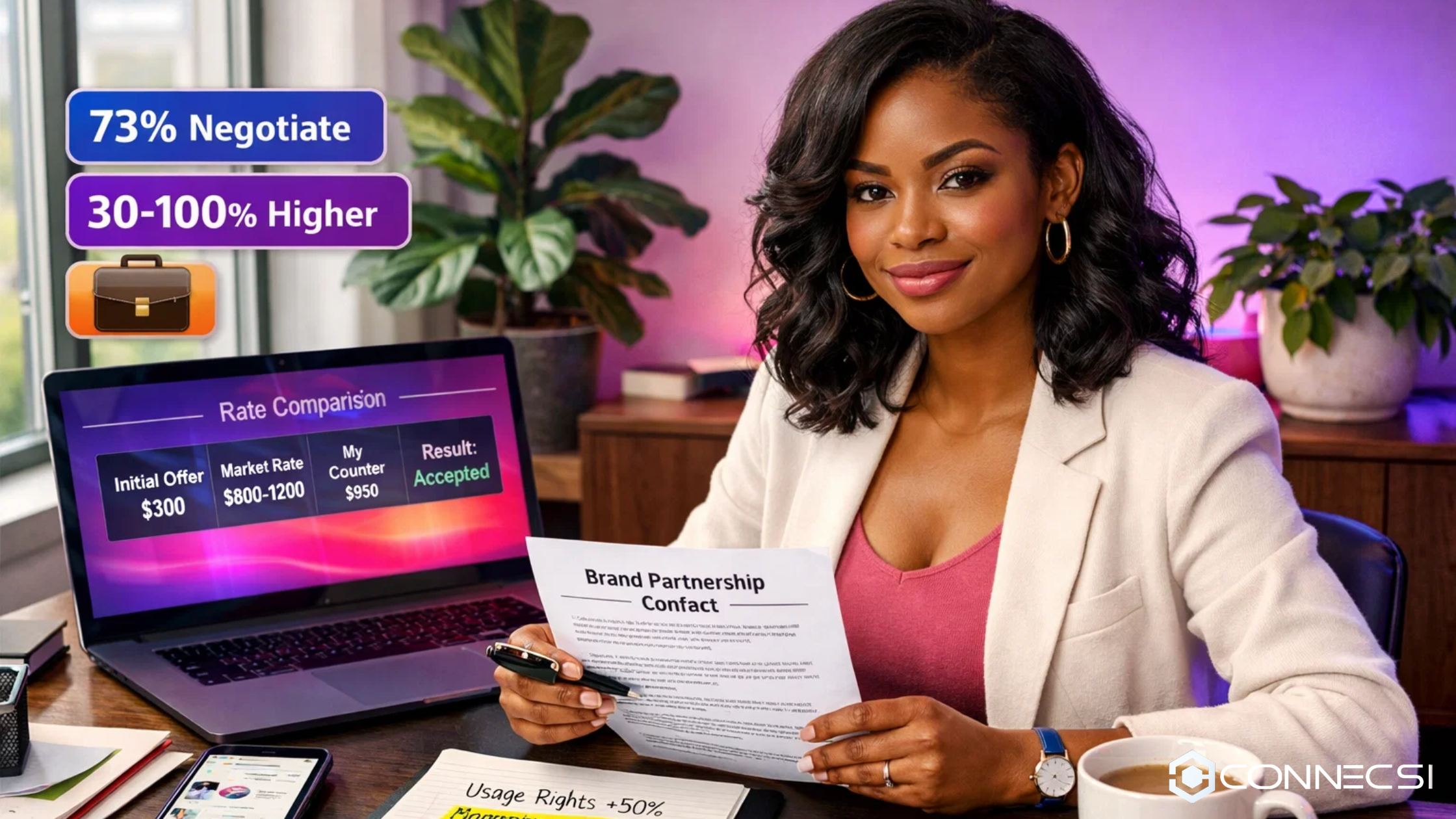
How to Negotiate Brand Deals: Influencer Rate Guide 2026
Master how to negotiate brand deals with proven strategies. 73% of brands negotiate rates—learn to counter offers and earn 30-100% more per partnership.
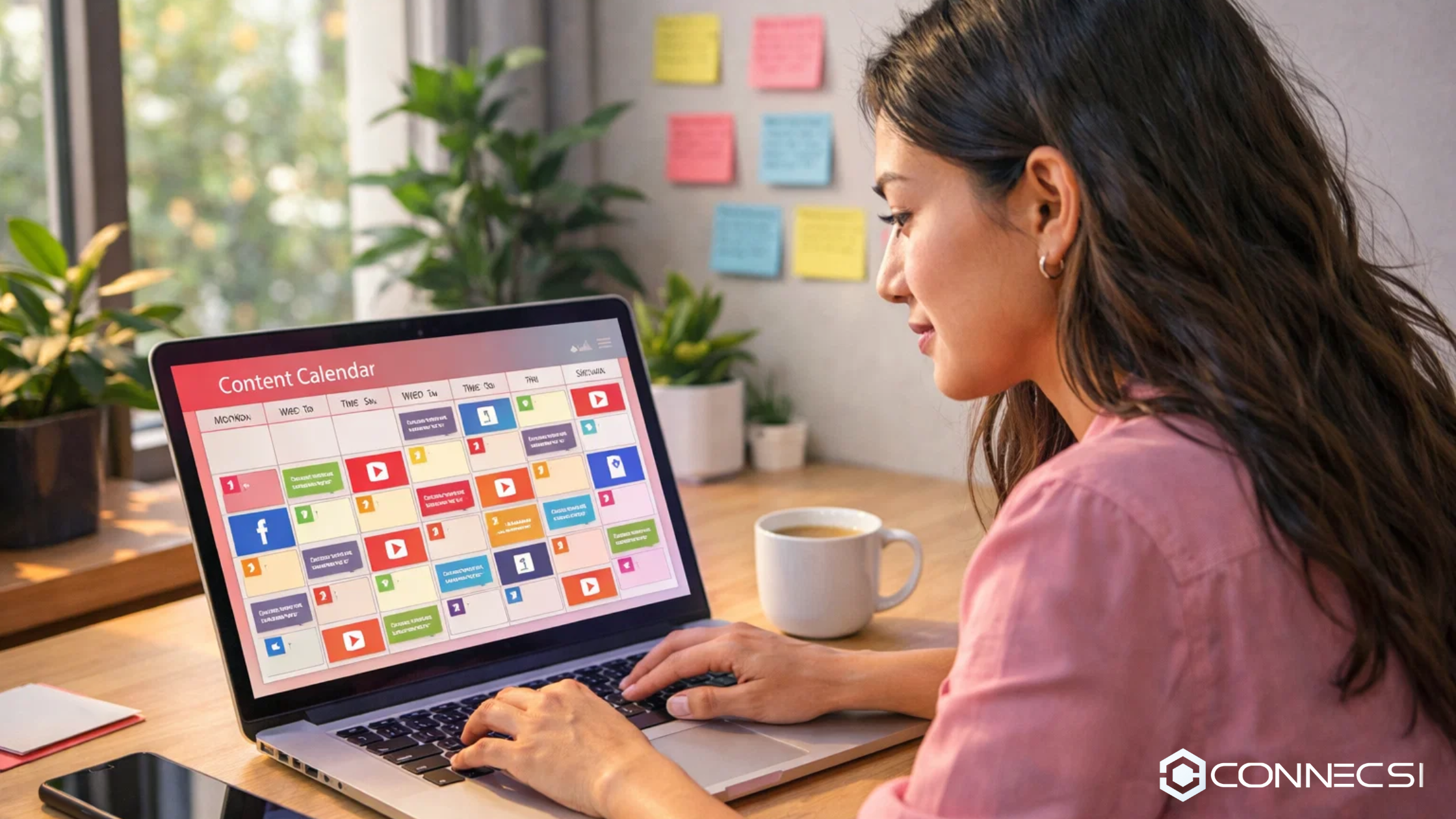
Content Calendar Template: Stop the Last-Minute Content Scramble
Content calendar templates save brands 6-8 hours weekly on planning. Download our free Excel template with annual, monthly, and weekly views.
Stay Updated
Subscribe to our newsletter for the latest influencer marketing tips and industry insights.
Ready to automate your influencer marketing?
Search influencers, manage campaigns, and track results — all in one platform.
Start Free