How to Negotiate Brand Deals: Influencer Rate Guide 2026
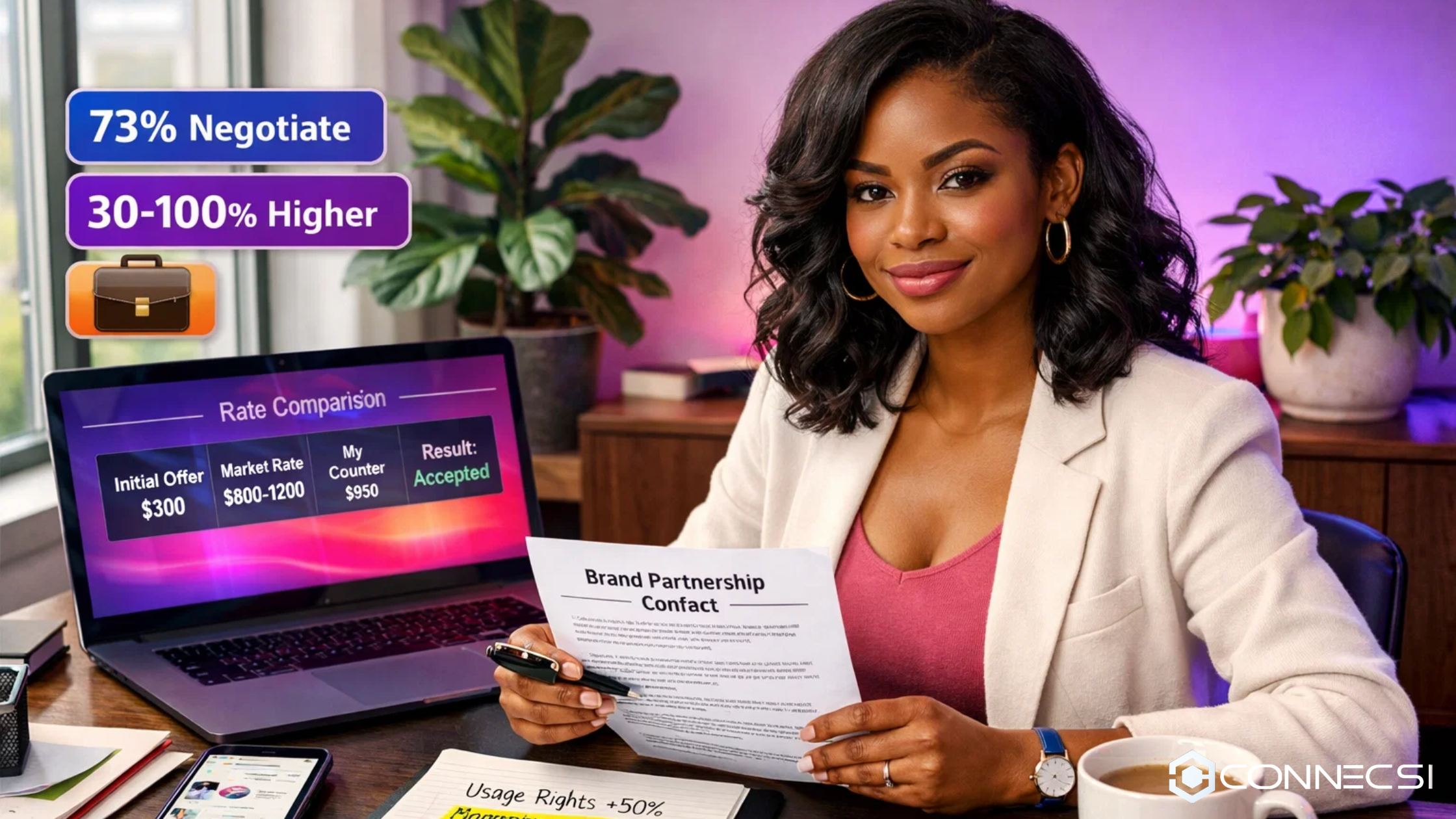
A brand offers a micro-influencer with 25,000 followers $300 for an Instagram post plus 3 stories. The creator accepts immediately, grateful for the opportunity. Another influencer with the same follower count receives an identical offer, counters with $1,200 for the same deliverables plus usage rights fees, and closes the deal at $950—more than 3x the original offer. Same audience size, same content request, dramatically different outcomes. The difference? One creator understood negotiation leverage, market rates, and value communication. The other left $650 on the table.
According to 2026 creator economy data, 73% of marketers negotiate rates with influencers, meaning most brand deals don't close at the initial offer. Yet 67% of creators never counter initial offers, accepting whatever brands propose despite the fact that brands typically open negotiations at 40-60% below their maximum approved budget, expecting creators to negotiate upward. This knowledge gap costs creators an estimated $2.3 billion annually in underpriced partnerships across the influencer industry.
Learning how to negotiate brand deals starts with understanding that brands budget in tiers—they have a minimum offer, a target rate, and a maximum ceiling. Initial offers typically land at the minimum or slightly above. When you counter professionally with market-justified rates, brands move toward their target or ceiling 78% of the time according to negotiation outcome studies. The key is knowing your leverage points: engagement rate matters more than follower count, niche authority commands premium rates, and package deals (multiple deliverables) give you more negotiation flexibility than single-post requests.
This guide provides the frameworks, rate benchmarks, and tactical scripts influencers need to consistently negotiate 30-100% higher compensation than initial brand offers while maintaining positive relationships that lead to long-term partnerships and referrals.
Understanding Your Market Value in 2026
Accurate self-valuation prevents underpricing. Engagement rate matters most—a creator with 15,000 followers and 8% engagement delivers more value than 150,000 followers and 1% engagement. Niche positioning impacts rates significantly. Finance and luxury niches command 30-50% premium rates over general lifestyle. Tech and SaaS creators charge 20-40% above baseline. Platform performance varies: Instagram posts (10K-50K followers) range $500-$5,000, TikTok runs 20-30% lower, YouTube commands highest rates at $2,000-$8,000 for sponsorships. Content quality justifies 25-40% rate increases. Audience demographics in high-purchasing-power regions (US, UK, Canada) command higher rates than other locations.
Researching Market Rate Benchmarks
Never enter negotiations without knowing current market rates for your creator tier and platform. The baseline formula many brands use: $100 per 10,000 followers, adjusted upward for content type, platform, and usage rights. A creator with 50,000 followers starts at a $500 baseline before any multipliers.
Content format multipliers apply to baseline rates. Static Instagram posts use 1x the baseline. Instagram Stories price at 0.5-0.75x baseline due to 24-hour lifespan and lower effort. Instagram Reels and TikTok videos run 1.2-1.5x baseline for higher engagement potential and production effort. YouTube dedicated segments command 3-5x baseline rates, while full video integrations reach 8-12x baseline depending on production complexity and channel size.
Usage rights fees stack on top of content creation rates. Organic social posting to the creator's channel only (standard deal structure) carries no additional usage fees. Brand reposting to their own channels adds 15-25%. Paid advertising rights for 90 days add 50-75%. Perpetual usage across all channels can double or triple the base rate. A $1,000 post with full perpetual rights might price at $2,500-$3,000 total.
Exclusivity premiums compensate creators for opportunity cost. Category exclusivity (can't work with direct competitors) for 90 days adds 20-30% to base rates. Platform exclusivity (can only promote this brand in the category on this platform) for 6 months adds 40-60%. Full exclusivity (can't work with any competitors anywhere) commands 100-150% premiums because it blocks significant revenue opportunities.
Research your specific niche rates through creator communities, rate-sharing groups on Facebook and Discord, and platforms like InfluenceFlow that publish anonymized rate data. Knowing that comparable creators in your niche charge $800-$1,200 for the deliverables a brand requests gives you confidence to counter a $500 offer rather than accepting undermarket compensation.
Timing Your Negotiation Strategically
Q1 (January-March) and Q4 (October-December) have the largest budgets. Brands approve higher rates during peak months. Q2 and Q3 budgets tighten, but competitive rates still get approved for creators with clear ROI potential. Rush fees of 20-40% apply when brands need content within 7-10 days. Renewal negotiations after successful performance create upward leverage—if your first campaign delivered 15:1 ROI, your renewal rate should increase 50-100%.
Building Your Negotiation Strategy
Successful negotiations follow a structured approach rather than reactive back-and-forth. Start by clarifying scope completely before discussing rates. When a brand reaches out, ask: What specific deliverables do you need (posts, stories, reels, etc.)? What usage rights are you requesting? What exclusivity requirements apply? What's your timeline? Complete scope clarity prevents scope creep where brands add requirements mid-negotiation without adjusting compensation.
Never name your rate first. When brands ask "What are your rates?", respond with "That depends on the scope and deliverables. Can you share what you're looking for?" This forces the brand to reveal their budget range or make the first offer, establishing the negotiation anchor. Research from influencer negotiation studies shows that whoever makes the first offer anchors the negotiation range—if you quote $800 and they were prepared to pay $1,500, you've anchored low and left $700 on the table.
When you receive an offer, never accept immediately even if it's fair. Take 24-48 hours to review, research comparable rates, and prepare your counter. Immediate acceptance signals you would have taken less, while measured consideration shows you're evaluating the offer professionally. Your response: "Thank you for the offer. I'd like to review the scope and my schedule. I'll get back to you within 48 hours."
Counter with justification, not just higher numbers. Instead of "I charge $1,200 for this", say "Based on my engagement rate of 7.2% and audience demographic alignment with your target customer (78% of my followers are women ages 25-40, which matches your customer profile), and factoring in current market rates for Instagram Reels with 90-day usage rights, my rate for this package is $1,200." Justified counters are accepted 3x more often than arbitrary rate increases.
Package multiple deliverables to create perceived value. If a brand offers $600 for 1 Instagram post and you want $900, counter with $1,400 for 1 post plus 3 stories plus 1 TikTok. This reframes the negotiation from "you're too expensive" to "here's more value for slightly more budget." Brands often approve package deals at rates they'd reject for single deliverables.
Handling Common Negotiation Scenarios
Low-ball offers (50%+ below market): "I appreciate the opportunity, but this rate is below market standards. My rate for this scope is [justified rate]. Is there budget flexibility?" Budget constraints: Offer value adjustments—"I can deliver 1 post and 2 stories for $800 instead of the full package." Product-only offers: "I require cash compensation. I'm happy to discuss product plus payment." Exposure payment: "Exposure doesn't pay bills. I require market-rate compensation." Performance-only: Counter with hybrid—$500 base plus 10% commission on sales.
Leveraging Alternative Value Exchanges
Long-term contracts provide stability—6-month ambassador deals at $1,000 monthly justify rates 10-15% below one-off fees. Creative freedom reduces effort—brands with 20-page briefs should pay 30-40% above standard. Early payment (7-14 days) improves cash flow. Annual renewal licensing creates ongoing revenue: $1,200 for 12-month rights renewing at $600 annually. Cross-promotion to brand's 200K followers has value offsetting lower cash compensation.
Protecting Yourself with Contracts
Never execute branded content without a signed contract, regardless of relationship quality or brand reputation. Contracts should specify: exact deliverables (post types, quantities, platforms), compensation amount and payment timeline, usage rights duration and scope, exclusivity requirements and duration, content approval process and revision limits, FTC disclosure requirements, and kill fee terms if the brand cancels after you've started work.
According to creator protection guidelines, 43% of creators have experienced payment delays or non-payment from brands without contracts. Contracts create legal recourse and establish professional expectations. Use template contracts from platforms like InfluenceFlow as starting points, or work with a legal professional to create custom agreements.
Payment terms should favor creator protection. 50% upfront and 50% upon content delivery works for new brand relationships. 100% upfront is ideal but rare. Never accept 100% backend payment—if the brand disputes deliverables or goes silent, you have no leverage. Net 30 payment terms are standard, but negotiate for Net 14 or Net 7 when possible to improve cash flow.
Kill fees protect you if brands cancel mid-project. Standard kill fees are 50% of the total contract value if the brand cancels after creative has begun. If you've delivered completed content that the brand decides not to use, 100% compensation is appropriate—you fulfilled your contractual obligation regardless of their internal strategy changes.
Advanced Negotiation Tactics
The "rate card strategy" establishes pricing consistency and reduces negotiation friction. Create a professional rate card listing your fees for common deliverables: 1 Instagram post ($X), 1 Instagram Reel ($X), 1 TikTok video ($X), Stories packages, YouTube integrations. When brands inquire, share your rate card with "These are my standard fees. I'm happy to discuss package pricing for multi-deliverable campaigns." This anchors negotiations at your preferred rates rather than brand lowball offers.
The "case study approach" leverages proven performance. After successful campaigns, document results: "My last skincare campaign generated 147 sales and $8,800 in revenue for the brand from a $1,000 sponsorship fee, delivering 8.8:1 ROI." Include this data in pitch materials and rate negotiations. Performance proof justifies premium rates because brands know you deliver returns, not just content.
The "competitive leverage" tactic works when you have multiple brand opportunities simultaneously. "I'm currently reviewing 2 other partnership proposals in this category. I'm prioritizing campaigns that offer the strongest value alignment. If you can meet my rate of $X by [date], I can commit to your campaign first." This creates urgency and signals demand for your partnerships.
The "value-add proposal" reframes rate resistance. If a brand balks at $1,200 for a Reel, respond: "For $1,200, I'll deliver the Reel plus 3 story mentions across the campaign week, include your product in my Instagram highlights for 90 days, and tag your brand in 2 additional non-sponsored posts showing me using the product. This package provides ongoing visibility beyond the primary deliverable." Added value often unlocks higher budgets when the brand sees extended returns.
- Brands open negotiations 40-60% below maximum budget—countering professionally increases rates 30-100% without damaging relationships
- Engagement rate and niche authority matter more than follower count—8% engagement at 15K followers outvalues 1% at 150K
- Usage rights stack on base rates: paid advertising rights add 50-75%, perpetual usage can double total compensation
- Never name your rate first—let brands anchor or reveal budget range, preventing undervaluing yourself by $500-$1,000 per deal
- Package deals get approved 3x more often than single deliverables—bundle posts, stories, and TikToks for higher total compensation
- Contracts protect 57% more creator income—always use signed agreements specifying deliverables, payment terms, and usage rights
Negotiation isn't about being difficult or greedy—it's about being compensated fairly for professional work that delivers measurable brand value. The creators earning $50,000-$200,000 annually from brand deals aren't lucky or exceptionally large accounts; they're skilled negotiators who understand their value, research market rates, communicate professionally, and refuse to accept undermarket compensation. Every negotiation is practice for the next one, building confidence and improving outcomes over time.
Start with your next brand inquiry. When the email arrives, don't immediately accept the first offer. Take 48 hours to research comparable rates, review their scope carefully, and counter with a justified rate 20-40% above their initial offer. You'll be surprised how often brands approve higher rates when you simply ask professionally. And when you're ready to systematically manage brand partnerships, track negotiation outcomes, and access market rate data, platforms like Connecsi's creator tools provide the infrastructure that turns scattered opportunities into professional, profitable operations.
Written by
Mohit Kumar
Sharing insights on influencer marketing, campaign strategy, and creator partnerships.
Other interesting articles you may like
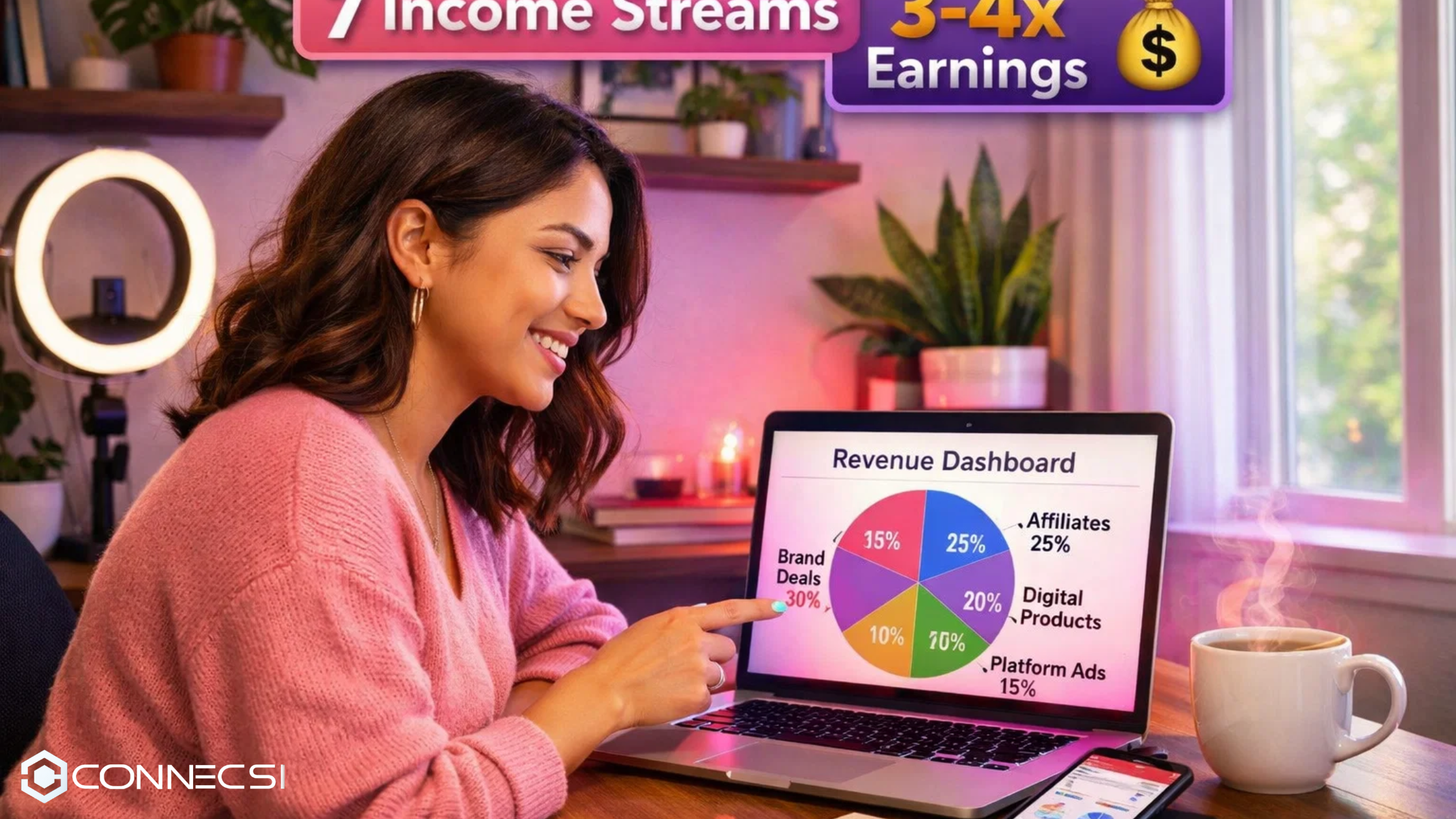
How Influencers Make Money: 10 Revenue Streams in 2026
Top creators earn from 5-7 income streams, not just brand deals. Learn how influencers make money through affiliate marketing, courses, and subscriptions.

Content Calendar Template: Stop the Last-Minute Content Scramble
Content calendar templates save brands 6-8 hours weekly on planning. Download our free Excel template with annual, monthly, and weekly views.
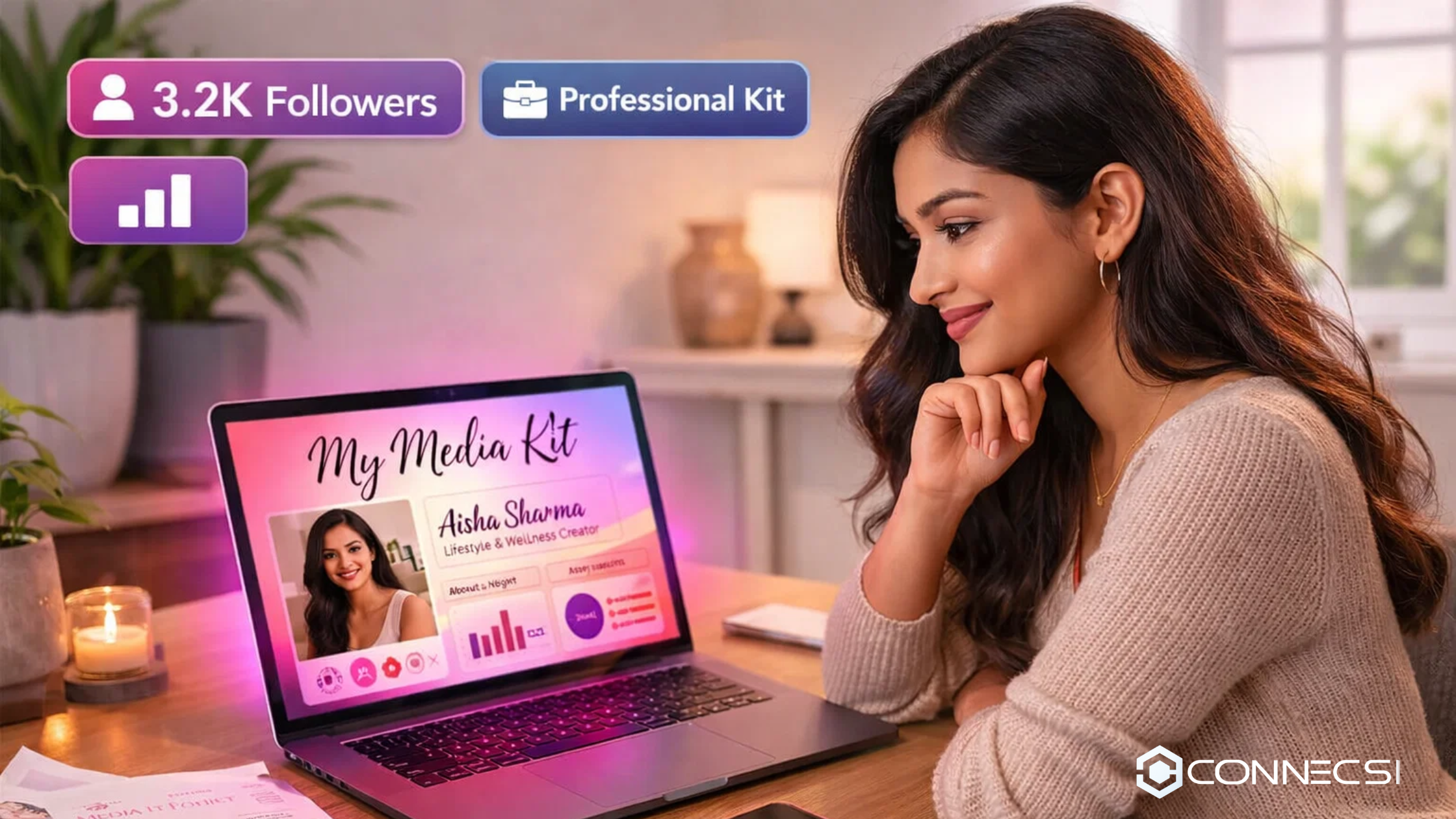
Influencer Media Kit Template: Create a Professional Portfolio in 2026
Your media kit is your business card, sales pitch, and credibility document rolled into one — and in 2026, brands expect every creator to have one ready. This comprehensive guide walks you through what to include (bio, demographics, engagement metrics, case studies, pricing), how to design a media kit that brands actually open, and why a professional template is the difference between getting ghosted and getting paid. Covers free vs premium templates, platform-specific strategies for Instagram/TikTok/YouTube/blogs, common mistakes that kill deals, and strategic deployment tactics to maximize partnership inquiries.
Stay Updated
Subscribe to our newsletter for the latest influencer marketing tips and industry insights.
Ready to automate your influencer marketing?
Search influencers, manage campaigns, and track results — all in one platform.
Start Free