Influencer Contract Template: Protect Your Brand Partnerships Legally

An influencer contract is the legal foundation of every brand-creator partnership — without one, you're operating on handshake agreements that offer zero protection when disputes arise over deliverables, payment, or content ownership. In 2026, 78% of successful influencer campaigns involve formal written agreements, while informal arrangements experience 43% more disputes and miss deadlines 89% more often. The difference between a smooth collaboration and a legal nightmare often comes down to a single document.
Whether you're a brand running your first sponsored post campaign or a creator signing a major partnership deal, a comprehensive contract protects both parties by clearly defining deliverables, timelines, compensation, usage rights, and termination conditions. This guide covers the 10 essential elements every influencer contract template must include, provides a downloadable template you can customize immediately, and shows how platforms like Connecsi are building contract management directly into campaign workflows.
When customizing your influencer contract template, create tier-specific versions based on deal value: a streamlined 2-page influencer contract template for collaborations under $1,000 (deliverables, payment, usage rights only), a comprehensive 5-page version for $1,000-$10,000 deals with performance metrics, and a detailed 10+ page influencer contract template for partnerships over $10,000 with exclusivity clauses and crisis management. This tiered approach saves time on small deals while ensuring protection for high-stakes collaborations.
Download Your Free Influencer Contract Template
Get instant access to our comprehensive Word template with all 10 essential legal sections, FTC disclosure language, customizable terms, and signature blocks. Simply click below to download:
Download Influencer Contract Template
Fill in the form below and we will send you a ready-to-use template via email
We respect your privacy. No spam, ever.
What Is an Influencer Contract and Why You Need One
An influencer contract is a legal agreement between a brand and a content creator that specifies exactly what each party will deliver, when they'll deliver it, and how much compensation is involved. It transforms vague expectations into enforceable obligations, ensuring both sides understand their commitments before content is created.
The contract serves three critical functions: legal protection (providing recourse if either party breaches the agreement), clarity (eliminating ambiguity about deliverables, timelines, and payment terms), and documentation (creating a paper trail that proves what was agreed upon). Even a $500 collaboration benefits from a written contract. Written agreements make the difference between an influencer being paid for their work or not — providing legal recourse when disputes arise over payment or content delivery.
The 10 Essential Contract Elements
1. Parties Identification and Scope
Identify both parties with full legal names and business entities. For brands, use the registered business name. For creators, include their LLC or business entity if applicable. Include mailing addresses and contact information for legal notices and payment processing. Define the campaign scope with a one-sentence summary like "Instagram sponsored content promoting sustainable athletic wear to fitness audiences ages 25-40."
2. Specific Deliverables
Never write "posts on Instagram" — instead specify: "Four Instagram feed posts (1080x1080px), each with 300+ character captions, posted Tuesdays at 10 AM EST between March 15-April 5, featuring spring collection with product tags and #BrandSpring2026." Clarify content type, quantity, platform specs, mandatory elements (product visibility, hashtags, discount codes), and technical requirements (resolution, accessibility features).
3. Timeline and Deadlines
Specify when the contract starts, when products/assets are delivered, when content is due for approval, how long the brand has to review, when final content posts, and when the campaign ends. Build in buffer time — if your approval takes 48 hours and content goes live Friday, don't set Thursday deadlines. For multi-creator campaigns, specify exact posting windows like "All creators post between 9-11 AM EST on March 22."
4. Compensation and Payment
State total compensation clearly: "Total fee: $2,500 USD." Break down payment structure: "50% ($1,250) upon contract signing, 50% within 14 days of posting." Specify payment method (bank transfer, PayPal, Venmo) and who invoices. Include performance bonuses if applicable: "Base $1,500 + $500 bonus if posts exceed 50,000 impressions." Address taxes: "Creator responsible for all taxes. Brand issues 1099-NEC by January 31."
5. Content Ownership and Usage Rights
Define who owns content and how the brand can use it. Common structures: creator retains ownership but grants limited usage rights (most common), brand purchases full ownership (higher fee), or shared ownership with defined terms. Specify usage duration (90 days, 1 year, perpetual), channels (organic social only vs. paid ads), geographic scope (US only vs. worldwide), and modification rights (crop/resize only vs. substantial edits). Each additional right commands higher compensation.
6. Exclusivity Terms
If restricting the creator from promoting competitors, be specific: "Creator will not promote [Brand X, Brand Y, Brand Z] for 60 days before and 30 days after campaign." Vague restrictions like "any athletic wear brand" are likely unenforceable. Exclusive deals typically pay 30-50% more. Most contracts are non-exclusive, allowing creators to work with multiple brands simultaneously.
7. FTC Disclosure Requirements
Specify exact disclosure language and placement: "Use #ad or #sponsored in first line of Instagram captions before 'more' truncation. Activate Paid Partnership tool. Include verbal disclosure in first 30 seconds of videos." Different platforms have different rules — TikTok requires Branded Content toggle, YouTube requires disclosure in video and description. Make clear: "Creator responsible for FTC compliance and indemnifies Brand against fines from improper disclosure."
8. Content Approval Process
Define the workflow: "Creator submits content by [Date]. Brand reviews within 48 hours. Creator revises within 48 hours. Brand approves or requests one minor polish within 24 hours." Limit to 2 revision rounds. Additional revisions require extra compensation. Content can be rejected for missing deliverables, violating brand guidelines, or factual errors — but not subjective reasons after it's shot.
9. Performance Metrics
If including performance requirements, be precise: "Posts should achieve minimum 2% engagement rate, measured as (likes + comments + saves + shares) / impressions." Specify reporting: "Creator provides screenshots from Instagram Insights within 7 days of posting. Brand may verify through third-party tools." For performance-based pay, include thresholds: "If engagement falls below 1.5%, Brand may withhold bonus but not base fee."
10. Termination and Dispute Resolution
Define termination conditions. Immediate termination for: failure to deliver content, non-payment 30+ days overdue, FTC violations, or major reputational damage. For non-breach termination: "Either party may terminate with 14 days notice. If before content creation, no fees due. If after delivery but before posting, Creator receives 50% fee." Include dispute resolution: "Parties attempt good-faith negotiation for 30 days before arbitration in [State]."
Customizing by Campaign Type
One-Time Sponsored Posts
These are the simplest contracts and should be streamlined for efficiency. Focus on the single deliverable (one Instagram post, one TikTok video), exact posting date and time, compensation amount and payment timing, usage rights duration (typically 90-180 days), and disclosure requirements. Keep these to 2-3 pages maximum — overthinking a $500 sponsored post creates unnecessary friction that may scare off creators.
Example structure: Parties identification, deliverable specification (one Instagram Reel, 30-60 seconds, posted March 15 at 2 PM EST), fee ($750 paid within 14 days of posting), usage rights (brand may repost to brand Instagram for 90 days), FTC disclosure (use #ad and Paid Partnership tool), and signature blocks. This covers everything needed without overwhelming either party with legalese.
Long-Term Partnerships
Ongoing relationships require more comprehensive contracts because they involve recurring obligations over months or years. Include monthly or quarterly deliverable quotas (like "4 feed posts and 8 Stories per month"), retainer payment structure ("$2,000 monthly for 6 months, paid by the 1st"), performance review schedule (quarterly check-ins), renewal terms (how either party extends or exits), and exclusivity provisions accounting for the extended timeline.
These contracts should include flexibility clauses for changing platform dynamics: "If platform algorithms change significantly or audience engagement patterns shift, parties agree to renegotiate deliverable types and posting frequency in good faith while maintaining monthly budget commitment." This prevents the contract from becoming obsolete if the social media landscape changes during a year-long partnership.
Multi-Platform Campaigns
When campaigns span Instagram, TikTok, YouTube, and blogs, contracts must detail platform-specific requirements. Create a deliverables matrix showing Instagram (2 feed posts, 5 Stories, 2 Reels), TikTok (3 videos), YouTube (1 dedicated video), and blog (1 article with 3 product photos). Each platform has different specifications, so include technical details for all — resolution, aspect ratios, video lengths, caption requirements.
Multi-platform contracts command higher fees because they involve substantially more work than single-platform campaigns. Compensation should reflect platform complexity: "Total fee $5,000, broken down as Instagram deliverables $2,000, TikTok deliverables $1,500, YouTube deliverable $1,200, blog article $300." This transparency helps creators understand how their work is valued across different channels.
Common Mistakes to Avoid
Vague or Ambiguous Language
The single biggest contract mistake is using imprecise language that allows multiple interpretations. "Posts should be high quality" is subjective — what does high quality mean? Professional photography? Minimum resolution? Specific lighting standards? Without clear definition, both parties can legitimately claim the other violated the agreement based on their different interpretations of "quality."
Replace vague terms with measurable standards. Instead of "high quality photos," write "images must be minimum 1080x1080px resolution with professional lighting and clear product visibility." Instead of "engaging content," specify "content must feature product in active use, include at least 3 product benefits, and use creator's authentic voice." Precision prevents expensive disputes.
Missing or Unclear Payment Terms
Contracts that state "$2,000 for Instagram posts" without clarifying when payment occurs create cash flow nightmares for creators and awkward situations for brands. Is payment made upfront? After posting? Net 30 days? Net 60? Without explicit timing, creators can't plan their business finances and brands may face unexpected payment demands.
Always include total amount, payment schedule with specific dates or triggers, payment method (bank transfer to specified account, PayPal to [email protected], etc.), late payment penalties if applicable (like "5% late fee if payment exceeds 15 days past due"), and who initiates payment (brand pays automatically on trigger vs. creator invoices).
Inadequate Usage Rights
Many contracts simply say "Brand can use the content for marketing" without specifying duration, channels, or geographic scope. This vague language creates conflict when the brand wants to run paid advertising six months later or use content in international markets, and the creator believes rights expired or were limited to organic social posting only.
Specify exact rights the brand receives: "Brand receives rights to use content on brand's Instagram, Facebook, and website; for organic posting only (no paid advertising); for 180 days from posting date; in North American markets only. After 180 days, all rights revert to creator. For usage beyond these terms, brand must negotiate additional licensing fee." This clarity protects both parties.
Ignoring FTC Disclosure
Contracts that don't address Federal Trade Commission disclosure requirements expose both parties to serious regulatory risk. Failure to properly disclose paid partnerships can result in fines of $43,280 per violation under current FTC penalty guidelines, and the FTC can pursue both the brand paying for the content and the creator who posted it.
Include specific disclosure requirements for each platform: Instagram requires #ad or #sponsored in the first line before "more" truncation plus Paid Partnership tool activation, TikTok requires Branded Content toggle and disclosure in caption, YouTube requires paid promotion checkbox and disclosure in video plus description, and blogs need clear disclosure at article beginning. Make creator's compliance responsibility explicit.
How Platforms Automate Contract Workflows
Modern influencer marketing platforms are integrating contract generation directly into campaign workflows. Platforms like Connecsi are being built to automatically generate contracts when brands create campaigns — brands input details once (objectives, deliverables, budget, timeline) and the system generates formatted contracts from pre-approved legal language. Electronic signatures handle workflows automatically, eliminating email attachments and version confusion. The most advanced platforms connect contract terms to campaign tracking — sending deadline reminders, triggering payments when content is approved, and flowing performance metrics into dashboards to ensure terms are enforced.
- Written contracts are essential — 78% of successful campaigns use formal agreements, experiencing 43% fewer disputes and 89% better deadline adherence than informal arrangements.
- All 10 elements are critical — parties, deliverables, timeline, compensation, usage rights, exclusivity, FTC disclosure, approval process, performance metrics, and termination conditions.
- Specificity prevents problems — replace vague terms with measurable standards, define exact payment timing, and specify precise usage rights with duration and scope.
- Customize by deal size — 2-page templates for deals under $1,000, 5-page for $1,000-$10,000, detailed 10+ page for over $10,000.
- Platforms automate workflows — Connecsi and modern platforms generate contracts from campaign inputs, handle digital signatures, connect terms to tracking, and eliminate manual work.
Influencer contracts transform risky handshake agreements into legally enforceable partnerships that protect both brands and creators. A comprehensive contract eliminates ambiguity about deliverables, timelines, compensation, and rights — preventing the disputes that derail 43% of informal collaborations. Connecsi is building contract automation directly into its campaign management module, enabling brands to generate, negotiate, sign, and store contracts without leaving the platform while creators receive clear terms upfront through structured workflows. When your legal foundation is solid, you spend less time resolving disputes and more time scaling successful partnerships.
Written by
Mohit Kumar
Sharing insights on influencer marketing, campaign strategy, and creator partnerships.
Other interesting articles you may like
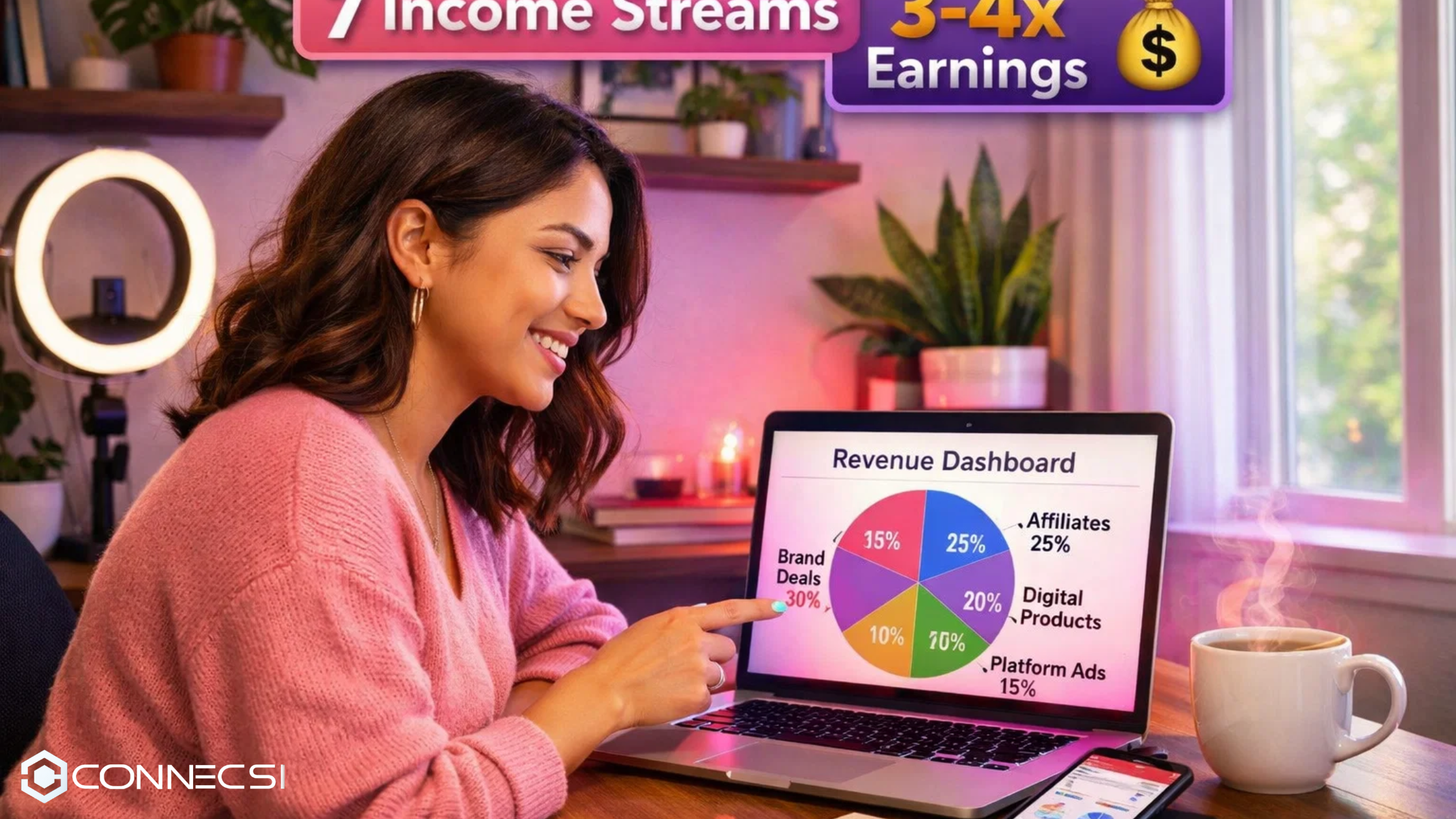
How Influencers Make Money: 10 Revenue Streams in 2026
Top creators earn from 5-7 income streams, not just brand deals. Learn how influencers make money through affiliate marketing, courses, and subscriptions.

How to Negotiate Brand Deals: Influencer Rate Guide 2026
Master how to negotiate brand deals with proven strategies. 73% of brands negotiate rates—learn to counter offers and earn 30-100% more per partnership.

Content Calendar Template: Stop the Last-Minute Content Scramble
Content calendar templates save brands 6-8 hours weekly on planning. Download our free Excel template with annual, monthly, and weekly views.
Stay Updated
Subscribe to our newsletter for the latest influencer marketing tips and industry insights.
Ready to automate your influencer marketing?
Search influencers, manage campaigns, and track results — all in one platform.
Start Free